Guan Chong pushes ahead with capacity expansion despite high gearing
This article first appeared in The Edge Malaysia Weekly on December 8, 2025 - December 14, 2025
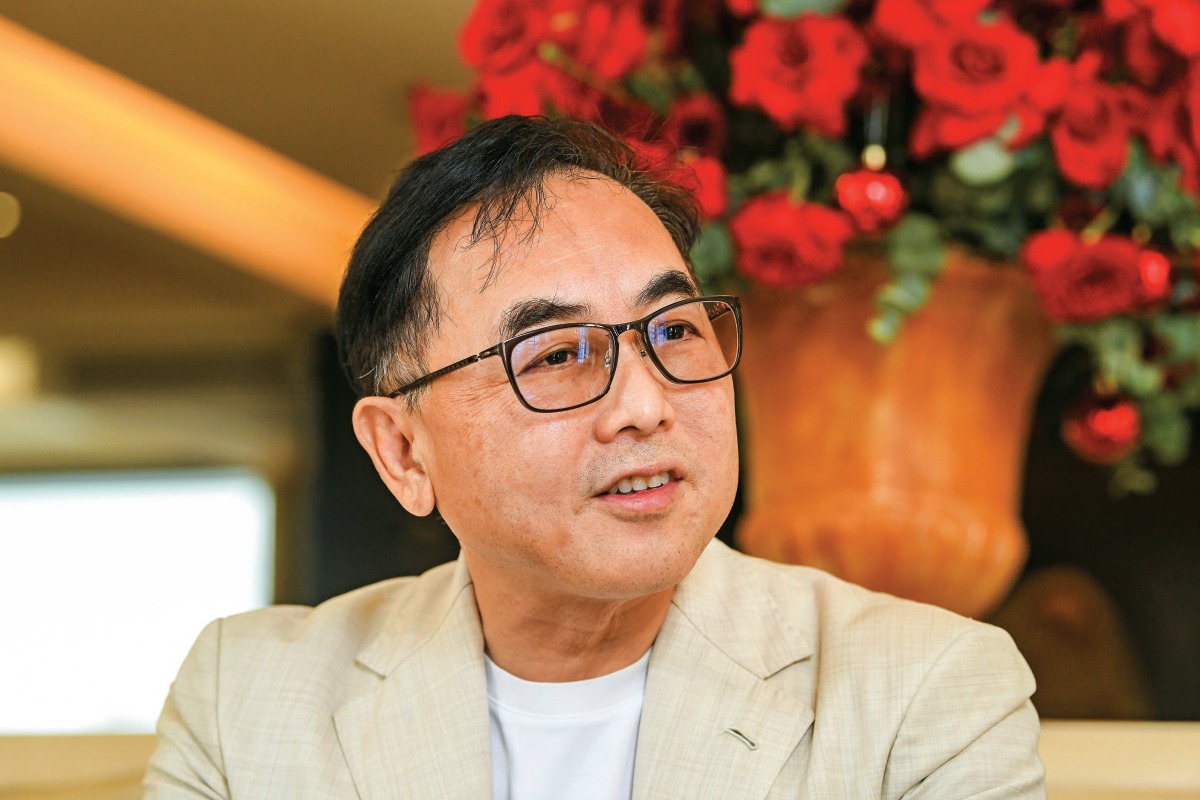
COCOA grinder Guan Chong Bhd (KL:GCB) does not intend to slow down the expansion of its cocoa-grinding capacity despite investor concerns over its elevated debt levels, says managing director and CEO Brandon Tay Hoe Lian (pictured). It plans to boost annual capacity to 500,000 tonnes, from 335,000 tonnes currently — a target initially delayed by Covid-19 pandemic disruptions.
Tay admits, however, the group still has a long way to go before closing the gap with the industry’s big three.
Despite being the world’s No 4 cocoa grinder, Guan Chong trails far behind global leaders Switzerland’s Barry Callebaut AG, Olam International Ltd and Cargill Inc. According to the International Cocoa Organisation, Barry Callebaut grinds roughly 1.2 million tonnes of beans annually, while Olam and Cargill process 970,000 tonnes and 800,000 tonnes respectively.
The expansion push comes as Guan Chong works to rein in a hefty balance sheet. The group’s net gearing ratio — a measure of its indebtedness — improved to 1.71 times at end-September 2025, amid the normalising of bean prices and hedging costs, down from a record 1.89 times at end-2024. Total borrowings stood at RM4.04 billion, mostly short-term trade loans that act as bridging facilities to manage working capital swings.
Tay, 60, acknowledges the debt load, but says the run-up over the past two years was deliberate. The group increased borrowings in the financial year ended Dec 31, 2024 (FY2024), to fund the purchase of higher-priced cocoa beans, ensuring uninterrupted factory operations.
“Of course, our goal is to keep gearing as close to one time as possible,” he tells The Edge in an interview.

The more accommodative cocoa bean price environment would help ease Guan Chong’s financing needs for bean purchases, which typically account for more than 70% of its working capital needs.
Capital support will also come from a one-for-four warrant issuance that could raise as much as RM470 million in fresh equity over the next three years as the warrants are exercised.
Even so, he argues that ramping up scale is non-negotiable. “Reaching 500,000 tonnes gives us the cushion to stay competitive, especially in Europe. Without that capacity, we’re simply not big enough to be efficient or cost-competitive.”
Tay says the goal is within sight. “Not that long. Within a few years, we can reach that.”
A key catalyst for closing the capacity gap is Guan Chong’s acquisition of a 25% stake in Transcao Côte d’Ivoire for RM130 million, a move that gives the Malaysian group access to roughly 80,000 tonnes of additional processing capacity without heavy capital expenditure (capex). Added to Guan Chong’s existing 335,000 tonnes, the expansion would significantly narrow the gap to its target.
Guan Chong currently has production facilities in Ivory Coast that grind about 65,000 tonnes of cocoa beans per year. Tay says, however, that the group remains cautious about doubling its Ivory Coast plant’s capacity to 120,000 tonnes until market conditions justify the investment. “We don’t simply invest.”
Profits normalise after ‘super-normal’ 2024
Like many cocoa processors, Guan Chong has been navigating one of the most volatile periods in the industry’s history. Cocoa prices surged 123% in 2024, driven by a supply deficit in West Africa, which accounts for more than 75% of global production. Erratic weather and persistent pest and disease outbreaks devastated crops, sending US cocoa futures to a record average of US$12,646 per tonne in December 2024.
The price spike boosted Guan Chong’s earnings. Net profit for FY2024 jumped 325% to RM429.18 million, from RM100.93 million in the previous year, while revenue nearly doubled to RM10.44 billion, from RM5.32 billion.
“Last year was exceptional because our competitors couldn’t meet demand and we stepped in,” Tay says, adding that some competitors are already tapping artificial intelligence to streamline operations and trim costs — a step Guan Chong has yet to take. The group currently employs roughly 2,000 people.
Cocoa prices have since retreated from their historic highs as industrial buyers scale back purchases to cope with rising costs and tighter margins. Prices averaged US$7,496 per tonne in 3Q2025, well below their peak.
Tay expects further softening ahead, arguing that cocoa could slip below the current US$5,000-per-tonne level next year as the market digests industry forecasts of a cocoa surplus exceeding 300,000 tonnes. “Demand should improve and cocoa prices will certainly be cheaper,” he says, noting that bean discounts remain volatile.
The correction has filtered through to Guan Chong’s performance. Net profit for the past nine months of this year (9MFY2025) has been affected by lower sales tonnage of cocoa butter and powder as earlier high selling prices slowed deliveries. Higher financing costs and tax expenses added further pressure.
Guan Chong’s net profit fell 14.9% year on year to RM184.04 million in 9MFY2025, from RM216.2 million. Interest expense surged 34% y-o-y to RM261.4 million, from RM194.8 million over the same period, reflecting a larger debt load. Earnings before interest, taxes, depreciation and amortisation (Ebitda) yield for 9MFY2025 also moderated to RM2,489.90 per tonne, from RM2,699.50 in FY2024, but still comfortably above FY2022/23 levels.
“If you ask me when earnings will be stable, I’d say never,” Tay remarks. “In fact, we’re preparing to scale up, and when your size grows, competitors start to feel threatened. They say we’re moving too fast.”
That competitive pressure is pushing Guan Chong deeper into Europe, where it sees a strategic advantage in moving further downstream in chocolate production. The group plans to spend £20 million (RM96 million) to £30 million to expand the facilities of Schokinag Schokolade-Industrie GmbH, its German industrial chocolate unit, which has an annual production capacity of 100,000 tonnes.
Orders for Schokinag improved in 4Q2025 and 1Q2026 as cocoa prices fell. Guan Chong also operates a 16,000-tonne industrial chocolate plant in the UK, which is running at a 95% utilisation rate.
Tay says Schokinag’s century-old facility is due for significant reinvestment. The group is weighing upgrades alongside potential customer partnerships in non-cocoa segments — products that mimic chocolate but cater for niches in nutrition, performance foods and speciality dietary segments — a fast-growing niche in Europe that has been expanding 30% to 40%.
Guan Chong is cautious about entering the segment, though. “We’re asking whether demand will hold once cocoa prices come down,” he says. “We’re considering it because the machinery is essentially the same, but we’re not putting heavy resources behind it. Our priority is still meeting our customers’ needs. If they don’t require these products, the same equipment can be used for something else.”
For Tay, flexibility is a competitive advantage. “You can’t underestimate small orders; they can scale. Once a company gets too big to be flexible, it loses its edge. So, we’re always looking at new areas where our capabilities could meet future demand.”
At the same time, the group is in talks with traditional chocolate makers such as Mondelez, Nestlé and Hershey about transitioning some business to cost-plus agreements.
Tay explains: “[Under that model,] we open our books such as our production costs, interest expenses and operating requirements. Then, chocolate makers like Mondelez, Nestlé or Hershey agree to a margin, say 3% to 5%, and lock it in long term.”
Such contracts guarantee margins and adjust annually for inflation, but they require substantial volumes.
Guan Chong’s strategy is to balance the two approaches. “We’re aiming for a 50:50 mix — half traditional customers that compete on price, and half under long-term cost-plus agreements,” Tay says. “We’ve already begun, but only with small quantities so far.”
Cautious outlook for 2026
Asked whether FY2024’s “super-normal” net profit can be repeated, Tay is cautious, noting that this year’s story is different, as terminal cocoa prices have been sliding and demand remains soft. “Will 2026 be better than this year? I can’t say yet,” he admits. “I expect 1Q2026 to stay sluggish, with some improvement in the second quarter. By the second half, the market should be stronger — surplus beans will offer more attractive discounts.”
Recently announced US tariff exemptions for cocoa should also support the recovery in demand for the near term.
“Discounts on cocoa beans have been volatile. In the October-to-December 2025 quarter, we were offered discounts of about US$1,000 per tonne. In the subsequent two quarters, it dropped to less than US$400. That’s a huge difference.”
It remains unclear whether the anticipated 300,000-tonne global cocoa surplus will translate into more attractive bean discounts. “Right now, everything is uncertain. But demand should improve and cocoa prices will certainly be cheaper,” Tay says.
According to Bloomberg, analysts forecast Guan Chong to post a net profit of RM251 million in FY2025 and RM262.5 million in FY2026.
Shares in Guan Chong have fallen 44% over the past year from a high of RM1.54, closing at 87 sen last Wednesday and valuing the group at RM2.4 billion.
While the group maintains a 25% payout policy, actual ratios have fluctuated from 16.22% in FY2020 to 23.28% in FY2023 and 10.95% in FY2024. “A lot of shareholders have asked for higher dividends, but we need the cash to fund expansion,” Tay stresses.
Preparing for succession
Yet, Tay’s biggest concern is neither cocoa prices nor leverage. “Right now, it’s about putting our successors in place,” he says, describing the challenge of preparing the next generation of leaders, both family members and external hires, for a business that has grown to more than 300,000 tonnes of annual cocoa-grinding capacity.
“When you inherit a business of this scale, one misstep can become a major problem. Flexibility is crucial, and the market can be unpredictable — sometimes you have to sell at a loss.”
Unlike some companies that operate on rigid take-it-or-leave-it models, Guan Chong cannot afford underutilisation, which would sharply increase costs. Tay says the group is focused on collective decision-making, rather than concentrating power in one successor.
To protect the group’s future, the Tay family is exploring a foundation structure to hold its shares in Guan Chong Resources Sdn Bhd, which currently owns 49.86% of the listed company. Shareholders of Guan Chong Resources include Tay (19%), his cousin and chief operating officer Tay How Sik (13.93%), and chief financial officer Hia Cheng (5%). Tay also holds an additional 4.82% directly in Guan Chong.
“Some family members want to cash out, while others want to preserve the business. A foundation could reduce potential conflicts,” he says.
Beyond governance, Tay believes the next generation of leadership must be equipped to manage a business that spans the UK, US, Germany, Indonesia, Malaysia and Singapore. “We’re no longer just Malaysian. Top management needs a global mindset. That’s what I’m trying to build.”
He also wants a performance-driven culture that recognises high performers and rewards ambition. “I don’t need 100% of staff to be super-driven — even 5% is enough. But you need hungry people; you must incentivise them. This is what we want to instil.”
Save by subscribing to us for your print and/or digital copy.
P/S: The Edge is also available on Apple's App Store and Android's Google Play.
The content is a snapshot from Publisher. Refer to the original content for accurate info. Contact us for any changes.
Related Stocks
Comments